
Greyhound Breed Profile: Speed, Temperament and Racing Lines
Best Greyhound Betting Sites – Bet on Greyhounds in 2026
 Available in US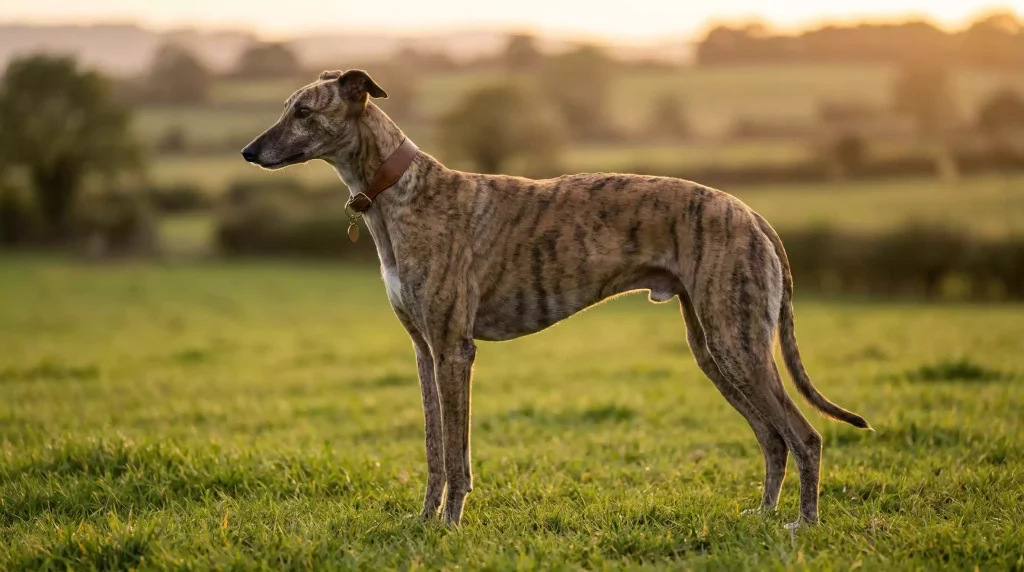
The greyhound is the fastest dog breed on earth and one of the oldest. Capable of reaching speeds of up to 45 miles per hour in a matter of strides, it is an animal designed — by thousands of years of selective breeding and, more recently, by rigorous commercial programmes — to do one thing extraordinarily well: run. Every greyhound racing breed profile starts and ends with speed, because speed is what the animal is for. But there is far more to the greyhound than the thirty seconds it spends sprinting around an oval track.
This guide explores the physiology that makes greyhounds so fast, the temperament that makes them so unexpectedly gentle at home, and the breeding programmes that produce the roughly 5,000 dogs registered for racing in the UK each year. Understanding the animal at the centre of the sport changes the way you watch it — and, if you ever adopt a retired racer, the way you live with it.
Built for Speed: The Greyhound’s Unique Physiology
The greyhound’s body is a biomechanical masterpiece optimised for short-distance sprinting. Every physical feature — from the deep chest to the elongated spine to the double-suspension gallop — serves a single purpose: covering ground as quickly as possible over distances of 250 to 700 metres.
Start with the heart. A greyhound’s heart is proportionally the largest of any dog breed, typically weighing 1.18% to 1.73% of total body weight compared to roughly 0.77% in other breeds. The larger heart pumps a greater volume of oxygenated blood to the muscles during a sprint, supporting the explosive energy output that a race demands. The lungs are similarly oversized, and the red blood cell count is higher than in non-sighthound breeds, which increases the blood’s oxygen-carrying capacity.
The musculature is dominated by fast-twitch fibres — the muscle type responsible for short, powerful contractions rather than sustained effort. This is why greyhounds are sprinters, not marathon runners. A greyhound can accelerate from a standing start to its top speed in about six strides, which takes roughly three seconds. The same fast-twitch dominance explains why the breed tires quickly over longer distances and why retired greyhounds are famously content to sleep for most of the day: their muscles are built for bursts, not endurance.
The skeleton contributes too. Greyhounds have a uniquely flexible spine that arches and extends with each stride, effectively lengthening the body and increasing stride distance. At full gallop, a greyhound’s stride can exceed five metres, and its gait enters what biomechanists call a double-suspension phase — a moment during each stride when all four feet are off the ground simultaneously. This happens twice per stride cycle: once when the body is fully extended and once when it is fully contracted. It is the same gait used by cheetahs, and it gives greyhounds their extraordinary ground speed relative to their size.
The aerodynamic build — narrow head, deep but narrow chest, tucked abdomen, long legs — minimises air resistance and maximises efficiency. The thin skin and minimal subcutaneous fat reduce weight but also make the breed sensitive to cold and prone to cuts and abrasions. These are engineering trade-offs: every feature that makes the greyhound faster makes it slightly more fragile in other ways.
Off the Track: The Greyhound Temperament
The single most surprising thing about greyhounds, to anyone who has never spent time with one, is how calm and gentle they are away from the racing environment. The animal that hits 45 mph on the track will spend the other twenty-three hours and fifty-nine minutes of the day asleep on a sofa, ideally with its legs in the air and its head wedged into a cushion at an angle that defies anatomy.
Greyhounds are quiet dogs. They rarely bark, they are not territorial in the way that guard breeds are, and they tolerate other dogs, children, and strangers with a placid indifference that borders on aristocratic. The breed has been described — only half-jokingly — as the world’s fastest couch potato. A retired greyhound’s exercise needs are modest: two twenty-minute walks a day is the standard recommendation, and many ex-racers are content with less.
The temperament has deep roots. Greyhounds were originally bred as sighthounds — dogs that hunt by sight rather than scent, sprinting after prey across open ground. The behavioural profile that supports this hunting style — calm observation, explosive reaction, immediate return to rest — translates directly into domestic life. A greyhound watches the world with quiet interest, responds to stimuli with brief intensity, and then goes back to sleep. It is a temperament that suits apartment living, elderly owners, and households where a bouncy, demanding dog would be unwelcome.
The one caveat is prey drive. Greyhounds are bred to chase, and some retain a strong instinct to pursue small animals — cats, rabbits, squirrels. This can be managed with training and awareness, and many retired greyhounds live happily with cats after careful introduction. But it is a characteristic that new owners should take seriously, particularly in the early weeks after adoption when the dog is still adjusting to non-kennel life.
Racing Bloodlines: How Breeding Shapes the Sport
The greyhound racing breed in the UK is sustained by a structured breeding programme that produces several thousand new dogs each year. In 2024, GBGB registered 5,133 new greyhounds for racing — a decline from 6,769 in 2021, reflecting a deliberate contraction in breeding volumes driven by welfare considerations. The industry includes approximately 15,000 registered owners and roughly 6,000 annual registrations when Irish-bred dogs entering UK racing are included.
The majority of racing greyhounds in the UK are bred in Ireland, where the breeding infrastructure is more extensive and the costs are lower. In 2024, 15.5% of new registrations were from British litters — a proportion that has been slowly increasing as the GBGB encourages domestic breeding to reduce reliance on imported dogs. The shift matters for welfare purposes: dogs bred in the UK can be tracked from birth through racing and into retirement within a single regulatory framework, which improves oversight at every stage.
Bloodlines in greyhound racing follow the same basic logic as Thoroughbred horse racing: successful sires and dams produce offspring that are more likely to perform at a high level. Certain sire lines dominate the sport in cycles — a successful Derby winner or prolific stud dog can produce hundreds of offspring that shape the racing population for years. Breeders select for speed, early pace, stamina over specific distances, and temperament, though the relative weighting of these traits varies depending on whether the goal is a sprint specialist, a middle-distance runner, or a stayer.
The commercial breeding model has attracted criticism from welfare organisations who argue that overproduction leads to surplus dogs and creates pressure on rehoming services. The GBGB’s response has been to reduce overall registration numbers while investing in rehoming infrastructure. The 24% decline in new registrations between 2021 and 2024 is presented as evidence that the industry is taking the issue seriously. Whether the reduction is sufficient remains contested.
More Than Just a Runner
The greyhound racing breed is defined by contradictions that make it one of the most fascinating animals in sport. It is the fastest dog alive and the laziest pet you will ever own. It is built for explosive power and temperamentally suited to doing nothing. It is a product of centuries of selective breeding and, after its racing career, perfectly happy to spend its remaining years on a sofa.
Understanding the breed enriches the watching experience. The next time you see six greyhounds fire out of the traps, you are not just watching a race — you are watching the culmination of thousands of years of genetic refinement, expressed in thirty seconds of extraordinary athleticism. The dogs deserve that level of appreciation, whether you are watching from the grandstand or the sofa they will eventually claim as their own.
The wider context is set out in our guide to watching greyhound racing.
What happens after racing is in greyhound rehoming.
