
Greyhound Racing Funding: BGRF Levy and Bookmaker Contributions
Best Greyhound Betting Sites – Bet on Greyhounds in 2026
 Available in US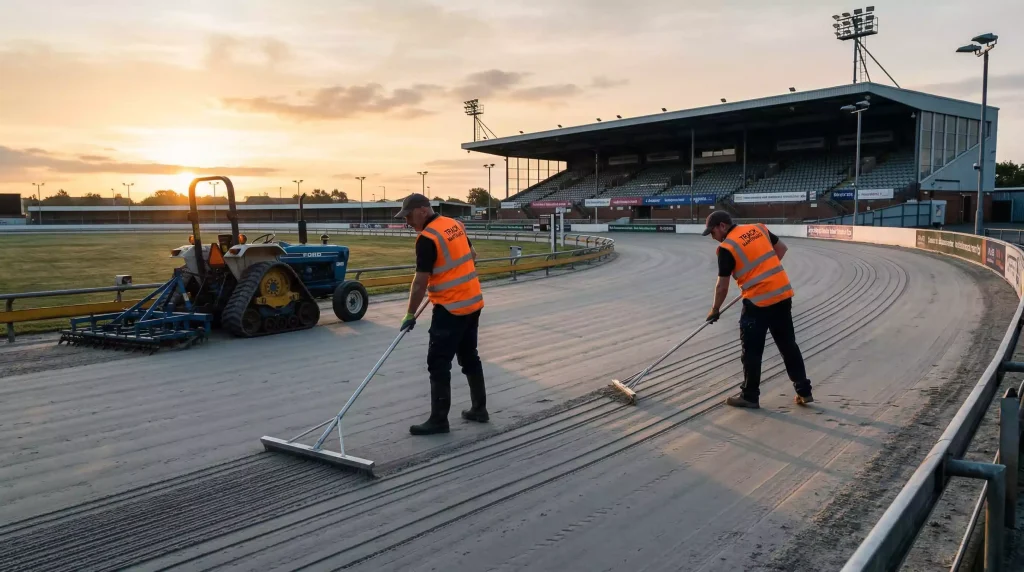
The money that keeps greyhound racing alive in the UK comes from three main sources: bookmaker contributions, track revenue, and media-rights deals. Of these, the bookmaker contribution — channelled through the British Greyhound Racing Fund — is the most important and the most contentious. Understanding greyhound racing funding means understanding a financial relationship that both sides consider unfair, for entirely different reasons.
This guide explains how the money flows, why it has declined so sharply over the past fifteen years, and what the campaign for a statutory levy would change if it ever succeeds. The figures involved are not abstract — they determine whether tracks can afford proper veterinary care, whether prize money attracts competitive fields, and whether the welfare reforms of recent years can be sustained.
How the Money Flows: BGRF, Bookmaker Turnover, and Track Revenue
The British Greyhound Racing Fund is the mechanism through which bookmakers contribute to the sport. The system is voluntary: bookmakers agree to pay a percentage of their turnover on greyhound racing into the BGRF, which then distributes the funds to GBGB-licensed tracks to support prize money, welfare programmes, and infrastructure. In the 2024-25 financial year, BGRF collected approximately £6.75 million — roughly 0.6% of the estimated £800 million in annual bookmaker turnover on licensed greyhound racing.
To put that number in context: for every £100 that punters wager on greyhound racing, less than £1 returns to the sport through the BGRF. The rest covers the bookmaker’s overheads, profit margin, and tax obligations. The 0.6% figure is not a cap or a floor — it is the average contribution rate that has been negotiated between the BGRF and the major bookmakers. Individual bookmakers contribute at different rates, and some smaller operators contribute nothing at all.
Track revenue provides the second funding stream. Stadiums earn money from gate receipts, catering, hospitality packages, on-course tote betting, and the fees they charge for hosting BAGS fixtures. The balance varies by track: a well-attended evening meeting at Nottingham or Romford generates meaningful gate and food revenue, while a BAGS afternoon fixture at a quieter venue may rely almost entirely on the fixture fee paid by SIS for the broadcast rights.
Media-rights income has grown since the Premier Greyhound Racing deal with Sky Sports Racing launched in January 2024. The terms of the deal are not publicly disclosed, but the exposure it provides — daily coverage on a channel reaching 14 million households — has a value that extends beyond direct payments into sponsorship, advertising, and audience growth. For the sport’s funding model, the Sky deal represents one of the few income streams that is growing rather than shrinking, and it has given the greyhound calendar a television presence it lacked for years.
The Decline: Why Bookmaker Contributions Dropped 67%
The BGRF’s income has fallen dramatically since the GBGB was established in 2009. In real terms — adjusted for CPI inflation — bookmaker contributions have dropped by 67%. The raw numbers tell the same story from a different angle: BGRF chairman Joe Scanlon noted in the fund’s 2023-24 annual report that income of £7.3 million was a long way from the historic highs of £10 million to £14 million, and that in one exceptional year contributions had exceeded £20 million.
Several factors explain the decline. The most significant is the shift from betting shops to online platforms. When bookmakers operated primarily through high-street shops, the relationship with greyhound racing was direct — SIS feeds filled shop screens, punters watched and bet in the same location, and the contribution rate reflected that dependency. As betting moved online, bookmakers diversified their content offerings. Greyhound racing competes for screen space with football, horse racing, tennis, virtual sports, and casino products. Its leverage in contribution negotiations weakened accordingly.
The voluntary nature of the system also played a role. Unlike horse racing, which benefits from a statutory levy — a legally mandated bookmaker contribution set by the government — greyhound racing has no legislative backing for its funding. Bookmakers contribute what they choose to contribute, and the BGRF’s negotiating position relies on goodwill rather than legal obligation. When margins tighten or priorities shift, greyhound funding is an easy line item to reduce.
The cumulative effect is a sport that generates hundreds of millions of pounds in bookmaker turnover but receives a diminishing fraction of that revenue back. The gap between what the sport produces and what it receives is the central tension in greyhound racing funding, and it drives almost every debate about the sport’s financial future.
Keep Welfare On Track: The Push for a Statutory Levy
The campaign for a statutory levy — a legally mandated bookmaker contribution to greyhound racing — has been the GBGB’s primary advocacy effort for several years. The argument is straightforward: the voluntary system has failed to maintain adequate funding, bookmakers are profiting from content they do not adequately compensate, and a statutory mechanism would create a stable, predictable revenue stream tied to actual turnover.
As Mark Bird, GBGB chief executive, stated when launching the Keep Welfare On Track campaign, the welfare advances the industry has achieved will remain under threat as long as the levy stays voluntary and non-negotiable, with some bookmakers failing to contribute their share. The campaign frames greyhound racing funding as a welfare issue rather than a commercial one: without adequate funding, track surfaces deteriorate, kennel standards slip, veterinary provision is cut, and prize money — which incentivises trainers to keep dogs in the sport rather than abandoning them — declines.
The political path for a statutory levy is uncertain. The UK Government has shown no appetite for legislative intervention — Culture Secretary Lisa Nandy’s February 2025 statement about greyhound racing focused on support for the sport but did not address funding reform. Horse racing’s statutory levy was established in 1961 and has been amended several times since, but extending the same principle to greyhound racing would require new primary legislation, which means parliamentary time, political will, and a degree of public pressure that the sport has not yet generated.
In the meantime, the GBGB continues to negotiate with individual bookmakers, pursue sponsorship deals, and grow media-rights income through its PGR partnership with Sky Sports Racing. These efforts have stabilised the financial position without resolving the structural problem. Greyhound racing funding remains a patchwork of voluntary contributions, commercial revenue, and media deals — a model that works well enough in good years and leaves the sport exposed in bad ones.
The Funding Question That Won’t Go Away
Greyhound racing funding is the issue that connects everything else: welfare standards depend on it, prize money flows from it, track maintenance is paid for by it, and the sport’s ability to invest in new facilities — like Dunstall Park — is contingent on it. The BGRF’s £6.75 million represents less than a penny in every pound that bookmakers turn over on greyhound racing, and the gap between that figure and the sport’s needs is the gap that defines the debate.
Whether a statutory levy will ever materialise is an open question. What is not in question is that the voluntary system has eroded the sport’s financial base over fifteen years, and that without reform — legislative or commercial — the decline will continue. The funding question will not go away, because the sport cannot afford to let it.
The wider context is set out in our guide to watching greyhound racing.
