
Greyhound Racing Injuries and Safety: Track Data and Vet Care
Best Greyhound Betting Sites – Bet on Greyhounds in 2026
 Available in US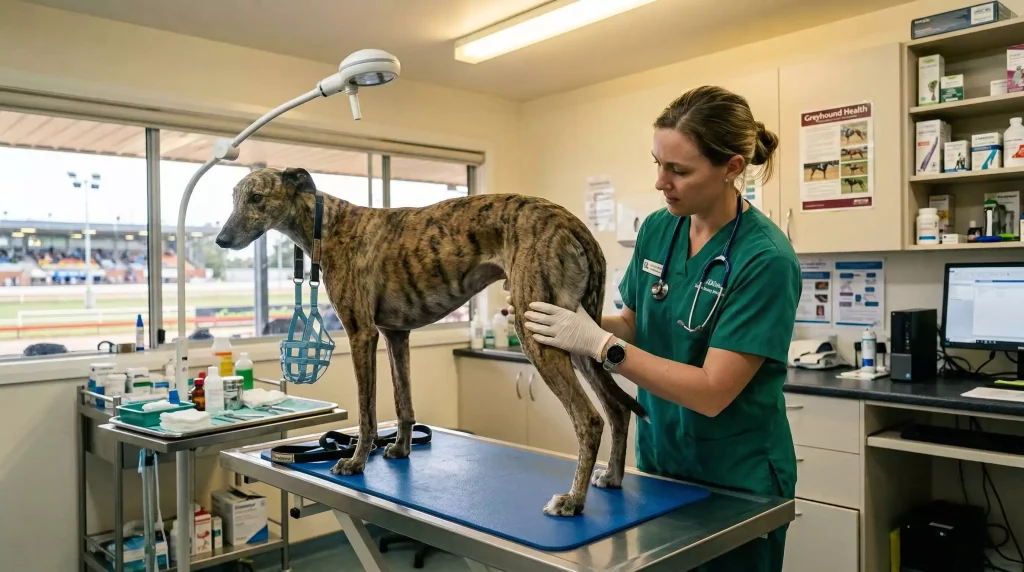
Greyhound racing injuries are the most sensitive subject in the sport. For critics, the injury data proves that racing greyhounds around oval tracks at high speed is inherently dangerous, regardless of how much the numbers improve. For the industry, the same data demonstrates that targeted reforms — better track maintenance, improved veterinary protocols, tighter regulation — are delivering measurable results. Both readings are defensible, and both start from the same set of figures.
This guide presents the 2024 injury and fatality data from the GBGB, explains how track maintenance and veterinary care work at licensed stadiums, and gives a clear picture of what the sport is doing to reduce harm — and where the remaining risks lie.
2024 Injury Data: Rates, Types, and Trends
The GBGB’s 2024 Injury and Retirement Data recorded an on-track injury rate of 1.07% — meaning 3,809 injuries occurred across 355,682 individual race runs. This is the lowest annual injury rate since the GBGB began publishing the data, continuing a downward trend that has been consistent for several years.
The injury types range widely in severity. The most common are muscular injuries — strains, tears, and soreness — which account for the majority of recorded incidents and are often minor enough that the dog returns to racing after a short rest period. Fractures are less common but more serious, particularly hock and wrist fractures that can end a racing career. Lacerations, collision injuries, and ligament damage make up the remainder.
The on-track fatality rate in 2024 was 0.03%, down from 0.06% in 2020 — a halving over four years. In absolute terms, this represents a small number of deaths relative to the total number of runs, but every fatality is a serious event that is investigated by the GBGB’s welfare team. The causes are typically catastrophic fractures sustained at speed, cardiac events during the race, or acute injuries on bends where dogs collide at full sprint.
The trend lines are unambiguous: both the injury rate and the fatality rate are falling. The GBGB attributes the improvement to a combination of factors — better track surfaces, more stringent pre-race veterinary checks, improved kennel conditions that reduce the likelihood of dogs racing while carrying undetected issues, and a grading system that keeps dogs competing at appropriate levels. Critics note that the absolute numbers — thousands of injuries and dozens of deaths annually — remain significant, and that a falling rate does not eliminate the fundamental risk inherent in the activity.
Track Maintenance and Safety Standards
The condition of the racing surface is the single most important variable in greyhound racing injuries. A well-maintained sand track with correct moisture levels, consistent depth, and properly banked bends reduces the forces on a dog’s joints and minimises the risk of slips, stumbles, and collisions. A poorly maintained track amplifies every risk factor.
GBGB regulations require licensed tracks to maintain their racing surface to published standards. The sand must be of a specified grain size and composition, raked and levelled before every meeting, and watered to maintain consistent firmness. The going — the official assessment of track condition — is checked and declared before each fixture. Track curators are responsible for monitoring conditions throughout a meeting and can recommend suspending racing if the surface deteriorates, though this is rare.
Bend design is another critical factor. The geometry of the bends — their radius, banking angle, and distance from the start line — determines how much lateral force dogs experience at speed. Tighter bends generate higher forces, which increases the risk of injuries to the outside legs as dogs lean into the turn. Modern track design favours wider, more gently banked bends, but many UK stadiums were built decades ago with geometries that predate current understanding of injury biomechanics. Retrofitting bends is expensive and sometimes structurally impossible without rebuilding the track entirely.
The GBGB publishes a track maintenance guide for stadium operators, covering surface management, drainage, hare maintenance, and safety equipment. Compliance is monitored through regular inspections, and tracks that fall below standard can face sanctions ranging from warnings to licence suspension. The opening of Dunstall Park in 2025 — with its purpose-built track designed to modern specifications — represents the direction the industry wants to move in, though the pace of upgrading older venues remains constrained by funding.
On-Track Veterinary Care: Protocols and Staffing
Every GBGB-licensed meeting must have a qualified veterinary surgeon present throughout. The vet conducts pre-race examinations of all runners, checking for lameness, muscle soreness, and general fitness. Dogs that do not pass the pre-race check are withdrawn. The vet also monitors each race from a trackside position and responds immediately to any incident — a dog that falls, pulls up, or shows signs of distress during or after a race is examined on the spot.
The on-track veterinary suite varies by stadium but typically includes an examination area, basic surgical facilities, X-ray equipment at more modern venues, and medication storage. For serious injuries that require specialist treatment, dogs are transported to veterinary hospitals under the vet’s direction. The cost of emergency treatment is covered under the GBGB’s welfare framework, which means that a trainer’s inability to pay does not determine whether an injured dog receives care.
Continuing professional development among racing industry stakeholders reached 582 hours in 2024 — covering veterinary staff, trainers, kennel hands, and racing officials. The CPD programme includes modules on injury recognition, first aid, kennel hygiene, and welfare-standard compliance. The investment in education reflects a broader industry strategy: reducing injuries is not solely about track surfaces and bend geometry. It is also about ensuring that the people who handle, train, and race greyhounds are equipped to identify problems before they become emergencies.
The veterinary system is not without criticism. Some welfare organisations argue that the vet’s dual role — serving the needs of the track operator and protecting the welfare of the dogs — creates a potential conflict of interest, particularly when withdrawing a dog from a race disappoints an owner or disrupts a fixture programme. The GBGB maintains that the vet’s welfare authority is absolute and cannot be overridden by commercial considerations. In practice, most track vets operate with the independence the rules grant them, but the structural concern remains a talking point in welfare debates.
Safety in Numbers
Greyhound racing injuries are falling in both rate and severity, driven by improvements in track maintenance, veterinary care, and industry education. The 2024 data — 1.07% injury rate, 0.03% fatality rate — represents the best figures the GBGB has ever recorded. The trend is consistent across multiple years, and the progress is real. Dismissing it would be as dishonest as ignoring the risks that remain.
The sport involves animals running at high speed around bends, and no amount of improvement eliminates risk entirely. What the numbers show is a sport that is investing in safety and measuring the results publicly. Whether the rate of improvement is fast enough to satisfy both its supporters and its critics is a question that each year’s data will continue to answer. For viewers, the transparency itself is a step forward — the figures are published, the trends are visible, and anyone can assess the evidence for themselves.
The wider context is set out in our guide to watching greyhound racing.
