
BAGS Greyhound Racing Explained: What It Means and Why It Matters
Best Greyhound Betting Sites – Bet on Greyhounds in 2026
Loading...
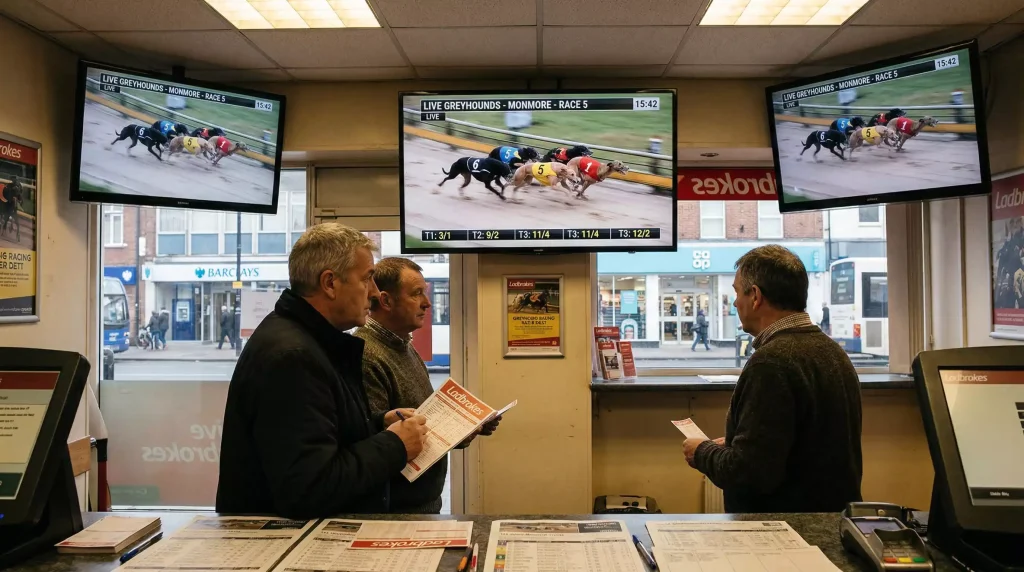
If you have ever looked at a bookmaker’s greyhound section at two o’clock on a Tuesday afternoon and wondered why there are races running at three different tracks simultaneously, the answer is BAGS. The Bookmakers’ Afternoon Greyhound Service is the system that produces the majority of greyhound racing content in the United Kingdom, and yet most people who bet on it — or watch it — have never heard the acronym explained.
BAGS racing is the commercial engine of the sport. It runs every day, across multiple GBGB-licensed tracks, generating the daytime fixtures that feed betting shops, online bookmakers, and streaming platforms. Without it, the financial model that keeps greyhound stadiums open and prize money flowing would look very different. And yet BAGS operates almost entirely in the background, invisible to the casual viewer who simply sees a race card and places a bet.
This guide explains what BAGS racing is, how it works, when and where it runs, and why its relationship with bookmakers shapes almost every aspect of how greyhound racing is funded in the UK.
What BAGS Is: History, Structure, and Purpose
BAGS stands for Bookmakers’ Afternoon Greyhound Service. The name is self-explanatory once you unpack it: it is a service that provides afternoon greyhound racing specifically for the benefit of bookmakers. The concept dates back to the mid-twentieth century, when the licensed betting industry realised that greyhound racing — with its short races, frequent fixtures, and low overheads — was an ideal product for filling the daytime gap in betting-shop content between morning horse racing and evening sports.
The structure is simple. A rota of GBGB-licensed stadiums is drawn up, and each track is allocated specific days for daytime racing. The fixtures are staged primarily for broadcast rather than for live audiences. Cameras relay the racing through SIS (Sports Information Services), the data and video provider that supplies betting-shop screens and online bookmaker streams across the country. The races are real — licensed, regulated, and run under the same GBGB rules as any evening open-race meeting — but the audience is overwhelmingly off-course. The stands at a BAGS meeting are mostly empty. The action happens on screens in betting shops, on bookmaker websites, and through streaming apps.
This was a deliberate design. BAGS was never intended to be a spectator event. Its purpose is to produce a steady flow of betting opportunities throughout the day, filling the gap between morning horse racing and the evening greyhound programme. The races are short — typically 30 seconds over distances ranging from 250 to 500 metres — and spaced at intervals of twelve to fifteen minutes, which means a full afternoon card can generate ten to fourteen separate betting events in a few hours. For bookmakers, that volume of content is the product. For the sport, the revenue it generates through bookmaker contributions is a critical funding stream.
The system has evolved over the decades. Originally, BAGS racing was distributed through a relatively small number of tracks, with limited broadcasting technology. Today, it is a professionally managed operation with high-definition camera coverage, professional commentary, and real-time data feeds. The tracks on the BAGS rota rotate weekly, and the schedule is coordinated centrally to ensure there are no direct clashes between meetings at different stadiums during the same time slot — a detail that matters for bookmakers who want to offer distinct markets at each fixture.
The BAGS Schedule: When and Where Daytime Races Run
BAGS racing typically begins between 10:30 and 11:00 in the morning and runs through until mid-to-late afternoon, usually finishing by 16:00 or 17:00 depending on the number of races on the card. The schedule operates every day of the week, including weekends, though the specific tracks involved change on a rotating basis.
On a typical weekday, you might see BAGS fixtures running at two or three stadiums simultaneously — for example, Romford and Sunderland in the morning, with Nottingham picking up the early afternoon slot. The rota is published weekly, and the easiest place to check it is the GBGB website or the fixture list on any major bookmaker’s greyhound section. SIS, which distributes the broadcast feed, also publishes the schedule for the benefit of its betting-shop clients.
The races themselves follow the same format as evening open-race meetings: six dogs, starting from numbered traps, running over a set distance on a sand-based oval track. The key difference is the grade of competition. BAGS meetings tend to feature lower-grade races — A5 through A10, in general terms — with smaller prize money than the Premier Greyhound Racing fixtures that dominate the evening schedule. This is not a criticism; it is by design. The racing needs to produce competitive fields and unpredictable outcomes to sustain betting interest, and the lower grades deliver that consistently.
For viewers, BAGS racing is available to watch through several channels. SIS distributes the feed to every licensed betting shop in the UK, so walking into a Ladbrokes, William Hill, Coral, or Betfred shop during the afternoon will almost certainly show BAGS greyhounds on the screens. Online, bookmaker streaming platforms — bet365, Betfair, William Hill — carry the same feed. RPGTV also broadcasts selected BAGS fixtures on Freeview channel 264. Sky Sports Racing picks up some BAGS meetings for its daytime schedule, though not all.
BAGS and Bookmakers: The Financial Relationship
The financial relationship between BAGS racing and the bookmaking industry is the most important dynamic in greyhound racing’s economic model — and the most contentious. Bookmakers had a combined turnover of approximately £800 million on licensed greyhound racing in the 2022-23 financial year, and the vast majority of that turnover is generated by BAGS fixtures. Evening open-race meetings attract on-course tote betting and some off-course interest, but the daily volume of off-course bets is driven overwhelmingly by the daytime BAGS schedule.
In return for this content, bookmakers make voluntary contributions to the sport through the British Greyhound Racing Fund. In the 2024-25 financial year, BGRF collected approximately £6.75 million — roughly 0.6% of bookmaker turnover on greyhound racing. That money funds welfare programmes, prize money, and track infrastructure. The word “voluntary” is critical: unlike horse racing, where a statutory levy compels bookmakers to contribute a fixed percentage of revenue, greyhound racing relies on goodwill. Some bookmakers contribute generously. Others contribute less, or not at all.
The imbalance has been a source of friction for years. The GBGB and the BGRF have repeatedly called for a statutory levy to replace the voluntary system, arguing that the current arrangement leaves the sport chronically underfunded relative to the revenue it generates for bookmakers. The campaign group Keep Welfare On Track has made this a public cause, pointing out that BGRF income has fallen by 67% in real terms since GBGB was established in 2009. That decline has occurred while the number of BAGS meetings — and, by extension, the volume of betting content — has remained broadly stable.
For the viewer, the practical implication is indirect but real. The quality of track surfaces, kennel facilities, veterinary care, and prize money all depend on how much money flows back from bookmakers into the sport. BAGS racing generates the content that produces the revenue; the debate is about how much of that revenue returns to fund the conditions under which the racing takes place.
The Engine Behind Daytime Greyhound Racing
BAGS racing is the infrastructure that keeps greyhound racing running every day of the week. It fills betting shops with content, produces the turnover that funds the sport, and provides the vast majority of live greyhound action available to watch through streaming platforms and television. Without it, the sport’s daily presence — the thing that makes greyhound racing available to watch at two o’clock on a Wednesday — would not exist.
Understanding BAGS means understanding the economic reality behind the race cards. The dogs are real, the competition is genuine, and the results matter to anyone tracking form or placing bets. But the system that puts those races on your screen is a commercial arrangement between stadiums and bookmakers, and the health of that arrangement determines the health of the sport itself.