
Greyhound Racing Odds Explained: Fractional, Decimal, and SP Demystified
Best Greyhound Betting Sites – Bet on Greyhounds in 2026
 Available in US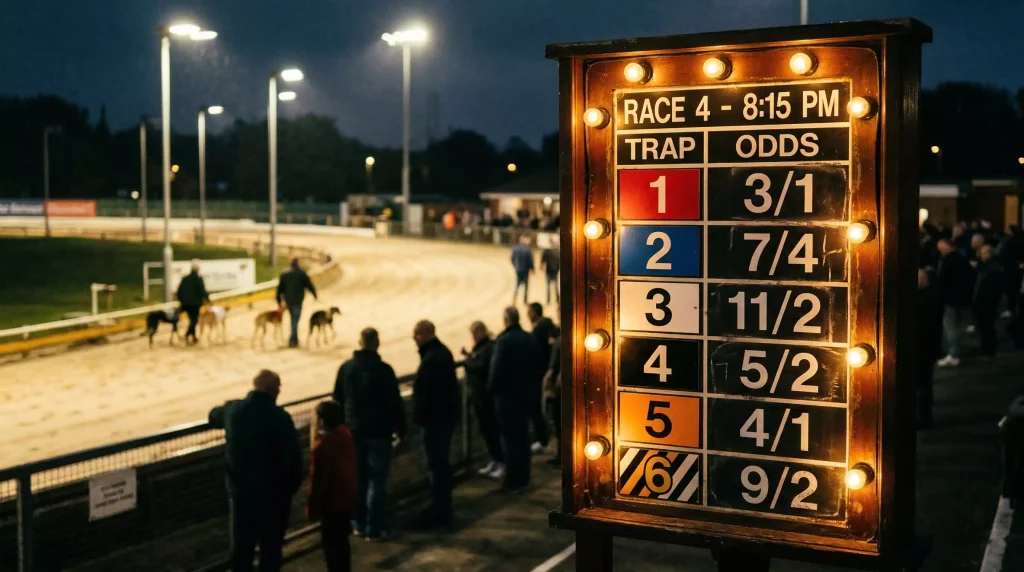
Greyhound racing odds are the language of the betting market, and if you cannot read them, you are placing bets blind. Every race card, every bookmaker screen, every results page displays odds in one format or another — and understanding what those numbers mean is the difference between knowing what you are risking and hoping for the best.
The UK gambling industry generated £16.8 billion in gross gambling yield in 2024-25, and the bookmakers who produced that figure rely on a significant proportion of their customers not fully understanding how odds work. This guide levels the playing field. It covers the three main odds formats you will encounter in UK greyhound racing — fractional, decimal, and Starting Price — explains the Tote pool system, and shows you how to calculate exactly what you stand to win before you commit a penny.
Fractional Odds: The Traditional UK Format
Fractional odds are the format most commonly displayed in UK betting shops, on trackside tote boards, and in traditional racing media. They look like this: 3/1, 5/2, 11/4, 7/4, evens. The first number represents the profit you make for every unit of the second number you stake.
At 3/1, a £1 bet returns £4 — your £1 stake plus £3 profit. At 5/2, a £2 bet returns £7 — your £2 stake plus £5 profit. The principle is consistent: multiply your stake by the fraction, and that is your profit. Add the stake back on, and that is your total return.
Shorter odds indicate a dog the market considers more likely to win. A dog at 2/1 is expected to have a stronger chance than one at 10/1. The shortest odds you will commonly see in greyhound racing are 4/6 or 8/11 — these represent favourites that the market believes are more likely to win than lose. At 4/6, you risk £6 to make £4 profit. The return is modest, but the implied probability is high.
The phrase “evens” means the odds are 1/1 — you win an amount equal to your stake. A £5 bet at evens returns £10: your £5 back plus £5 profit. Evens is the dividing line between odds-on (shorter than evens, where the implied probability exceeds 50%) and odds-against (longer than evens, where the market gives the dog a less-than-even chance).
One practical tip: fractional odds that look complex — 11/8, 13/8, 100/30 — are easier to interpret if you convert them to a simple ratio. 11/8 means roughly 1.4 to 1. 100/30 is roughly 3.3 to 1. With practice, the mental arithmetic becomes automatic, but a phone calculator is no shame for the first few meetings.
Decimal Odds and Starting Price: Alternatives You’ll Encounter
Decimal odds are the default format on most online bookmaker platforms and are increasingly common in UK greyhound racing. They express the total return — stake included — as a single number. A dog at decimal odds of 4.00 returns £4 for every £1 staked, which is equivalent to fractional 3/1. A dog at 2.50 returns £2.50 per £1, equivalent to 6/4.
The advantage of decimal odds is simplicity. To calculate your return, multiply your stake by the decimal number. A £10 bet at 3.50 returns £35. No fractions to divide, no mental gymnastics. For this reason, many regular bettors switch their bookmaker display to decimal format and never look back. Every major bookmaker app — bet365, Betfair, William Hill, Ladbrokes — offers the option to toggle between fractional and decimal in the settings.
Starting Price, usually abbreviated to SP, is the final set of odds offered on a dog at the moment the race starts. It is set by an official at the track based on the prices available in the on-course betting ring. The SP is used to settle bets for anyone who did not take a specific price in advance — if you placed a bet “at SP,” you are accepting whatever the market says at the off.
SP matters because greyhound racing odds can shift dramatically in the minutes before a race. A dog might open at 5/1 in the morning market, drift to 8/1 by lunchtime, and be backed down to 3/1 by the time the traps open. If you took the price at 8/1, you get 8/1 regardless of what happens later. If you bet at SP, you get 3/1. The difference can be significant, which is why experienced punters pay attention to price movements and take early value when they see it.
In greyhound racing specifically, SP tends to matter more than in horse racing because the markets are thinner — fewer people bet on greyhounds, so individual large bets can move the price more sharply. A single punter placing £200 on a dog in an A6 BAGS race can shift the SP substantially, which means the price you see ten minutes before the off may bear little resemblance to the final number. Taking a price early, when you see one you like, is a basic discipline that most profitable greyhound bettors follow.
Tote and Pool Betting: How Shared Odds Work
The Tote operates differently from bookmaker betting. Instead of offering fixed odds on each dog, the Tote pools all the bets placed on a race and divides the total (minus a deduction for operating costs) among the winning tickets. The odds are not known until after the race, because they depend on how much money has been staked on each dog.
At the track, the Tote is the most accessible form of betting — walk up to the window, state your selection and stake, receive a ticket, and collect after the race if your dog wins or places. The minimum stake is usually £2. The Tote offers win, place, forecast, and tricast pools, with dividends declared after each race and displayed on the trackside board.
The practical difference for the bettor is unpredictability. With a bookmaker, you know your odds before the race starts. With the Tote, you find out after. This can work in your favour — if you back an outsider that the rest of the pool has ignored, the dividend can be substantially higher than the bookmaker SP. It can also work against you — if everyone has backed the same favourite, the pool dividend will be lower than the bookmaker price.
Licensed betting operators generated £554 million in gross gambling yield in the final quarter of the 2024-25 financial year alone, and the Tote represents a small fraction of that. But at the track, the Tote remains the traditional and most atmospheric way to bet. It connects you directly to the pool of fellow racegoers, and the ritual of collecting from the window after a winner has a satisfaction that tapping a phone screen cannot replicate.
Read the Odds, Bet with Clarity
Greyhound racing odds are not complicated once you learn the formats. Fractional odds tell you profit relative to stake. Decimal odds tell you total return in a single number. SP is the market’s final word on what a dog is worth. The Tote pools everyone’s money and divides the proceeds. Each format serves a purpose, and understanding all of them means you are never caught out by a number you cannot interpret.
Set your bookmaker display to the format you find most intuitive, learn the conversion between fractional and decimal for the other, and always know what your bet will return before you place it. The odds are the only part of greyhound racing that you can calculate in advance — so make sure you do.
The wider context is set out in our guide to watching greyhound racing.
