
Greyhound Racing Costs: Entry Prices, Dining Packages, and What to Budget
Best Greyhound Betting Sites – Bet on Greyhounds in 2026
Loading...
Greyhound racing is one of the cheapest live-sport experiences in the UK, and yet the most common question from first-time visitors is how much does greyhound racing cost — followed closely by the suspicion that the answer is more than they expect. It usually is not. As Sarah Newman of Arena Racing Company noted when reviewing the 2025 attendance figures, greyhound racing remains a cost-effective night out for people of all ages, and the 5% growth in stadium footfall that year suggests the public agrees.
The total cost of a visit depends on three things: which track you go to, whether you book a dining package, and how much you spend on food, drink, and the occasional bet. At the basic end, a solo visit to an evening meeting can cost under £10. At the premium end, a hospitality package for a group of eight might run to several hundred pounds. This guide breaks down every component so you know exactly what to budget before you go.
Entry Prices Across UK Tracks: From £5 to Premium Packages
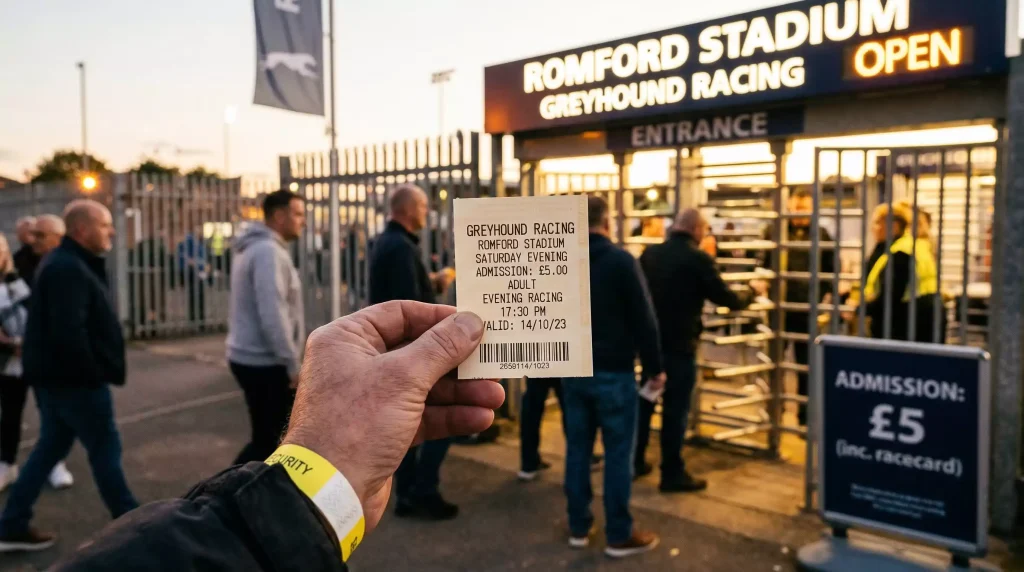
General admission to a standard evening meeting at most GBGB-licensed tracks costs between £5 and £8 for adults. Some tracks charge at the lower end of that range on quieter weeknight fixtures and at the higher end for Saturday evenings and special events. Under-18s are admitted free or for a nominal fee at the majority of venues — a policy that makes greyhound racing one of the few live sports where taking the family does not automatically double the entrance bill.
A few specifics. Romford charges £7 for standard evening admission, with midweek fixtures often free. Nottingham is similar, with occasional promotions that reduce the price further. Dunstall Park, the newest track in the country, follows the standard pricing model: around £5-8 depending on the fixture. Towcester, home of the English Greyhound Derby, charges standard prices for regular meetings but scales up for major events — Derby night commands a premium, and the best hospitality packages sell out well in advance.
Nottingham’s Boxing Day meeting in 2025 — which drew over 1,000 spectators — is a useful case study for value. The event was priced as a standard evening meeting with family-friendly pricing, and the crowd reflected that: a mix of regulars, families, and first-timers who came for the holiday atmosphere as much as the racing. The turnout demonstrated that when the greyhound racing cost is kept low, the audience responds.
Premium admission and trackside packages exist at most venues. These typically include a reserved table, trackside seating, a racecard, and sometimes a drink on arrival. Prices range from £10-15 per person for basic upgrades to £25-40 for restaurant-level packages. The best-value versions are often group bookings — birthday packages, corporate events, hen nights — where the per-head cost drops with larger numbers.
Dining and Hospitality: What’s Included and What’s Extra
The dining experience at a greyhound stadium varies significantly between tracks. At the better venues — Towcester, Dunstall Park, Nottingham — the restaurant offers a proper sit-down meal with a view of the track, timed so that courses arrive between races. The food is typically carvery or set-menu standard: a starter, main, and dessert, with drinks ordered and paid for separately. Restaurant packages usually include entry, the meal, a reserved table, and a racecard, and they are priced between £25 and £40 per person depending on the track and the night.
Casual dining is available at every track. Bars serve burgers, pies, chips, and hot dogs at pub prices — expect to pay £5-7 for a main item and £4-6 for a pint. Soft drinks and hot beverages are available and typically cheaper than you would find at a football ground or a music venue. The food is not gourmet, but it is filling, fairly priced, and served quickly enough that you do not miss a race.
What catches first-timers out is the extras. A racecard costs £1-3. Parking is usually free, though a handful of tracks charge a nominal £1-2 fee. Tote betting starts at a £2 minimum stake, so if you want to have a flutter alongside your meal, budget a small amount separately. There is no pressure to bet — the tote windows are separate from the dining area, and many restaurant-package guests spend the entire evening without placing a wager.
Budget-Friendly Tips: Getting the Most for Your Money
The greyhound racing cost can be kept remarkably low if you plan ahead and make a few smart choices.
Go on a weeknight. Saturday evenings are the busiest and sometimes the most expensive. Tuesday or Thursday fixtures often have the same quality of racing at lower admission prices, with shorter queues at the bar and more space in the grandstand. Some tracks run midweek promotions — discounted entry, two-for-one meal deals, or free racecard with admission — that make a weeknight visit even better value.
Eat before you arrive, or bring snacks. Track food is not expensive, but it adds up if you are feeding a family. A meal at home before leaving, topped up with a drink and a snack at the venue, cuts the food bill substantially. Most tracks do not restrict outside food in the general admission areas, though restaurant and hospitality zones will expect you to order from their menu.
Set a betting budget or skip the betting entirely. If you do want to bet, decide on a fixed amount before you arrive — £10 or £20 for the evening — and stick to it. Tote bets at £2 per race give you a stake in ten races for £20, which spreads the entertainment across the entire card. If betting does not interest you, the racing is free to watch from the moment you walk through the gate.
Take advantage of group rates. Many tracks offer discounted packages for groups of eight or more, which makes a team night out or a birthday celebration considerably cheaper per person than booking individually. Check the track’s website before your visit — most list group packages with pricing and booking details.
Finally, check for seasonal promotions. Tracks frequently run offers around bank holidays, half-term weeks, and the lead-up to Christmas. These might include reduced entry, complimentary racecards, or bundled food-and-drink deals that cut the overall greyhound racing cost by a meaningful margin. Following your local track on social media is the easiest way to catch these promotions before they sell out.
A Night Out That Doesn’t Break the Bank
Greyhound racing cost compares favourably with almost any other live-entertainment option in the UK. Two adults and two children can attend an evening meeting, eat, drink, and watch twelve races for under £50. A couple on a date can do the same for under £30, with restaurant dining pushing that toward £60-80 depending on the package. For a group booking with food, drink, and a few tote bets, the per-head cost rarely exceeds £40.
In a landscape where a family trip to the cinema approaches £50 before popcorn, and a football match for four can clear £200, greyhound racing remains genuine value. The racing is live, the evening is long enough to feel like a proper night out, and the cost is low enough that going twice a month is realistic rather than aspirational.